


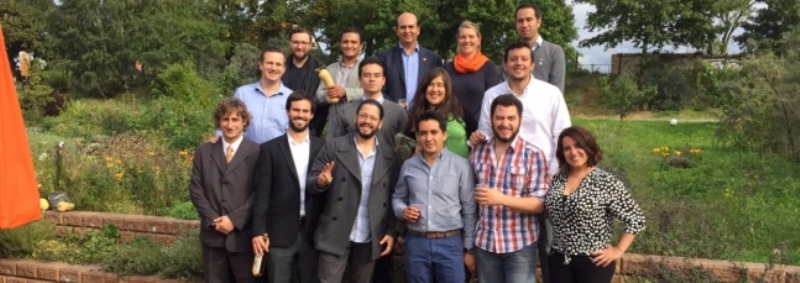
Of all fruits, it turned out to be the sea buckthorn – a type of berry largely unknown in Mexico – that was the centre of attention for Mexican executives who visited the company Christine Berger GmbH & Co. KG in Petzow at Potsdam, in late September of 2015 as part of their management Training Programme. CEO Dorothee Berger, who heads the company as a representative of its second generation, welcomed the Mexican MP participants to the company headquarters at Lake Glindow on a sunny autumn day.
During the previous three weeks of the Mexican group’s intensive programme in southern Germany and Berlin they had already completed countless training courses, attended single sessions and visited various small- and medium-sized German enterprises. But the visit to Christine Berger GmbH was a particular highlight, especially for the representatives from the food industry. The company itself specializes in the production of sea buckthorn products. Sea buckthorn had been grown in East Germany as a substitute for lemons and oranges rich in vitamin C, but there was very little interest in the sour-tasting berries following German reunification at first. In 1993 the company founder, Christine Berger, started her own business and looked for new sales opportunities. Over the years she developed over 50 tasty variations, starting with three kinds of sea buckthorn juice and eventually ranging from sea buckthorn secco to an exotic breakfast spread with chilli and guava. Sea buckthorn cosmetics constitute another key product division.
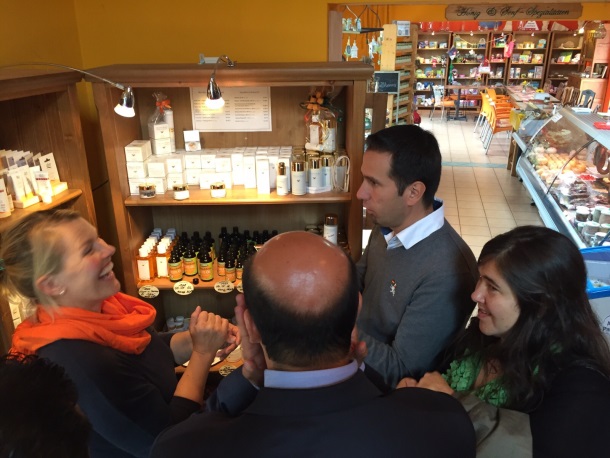 With the group arriving at noon, they started their visit in the company’s own “market of specialties” enjoying dishes incorporating sea buckthorn, such as sea buckthorn cake. Sea buckthorn juice was served for refreshment. The visitors from Mexico realised two key points during their talks with Ms. Berger: pure, sour sea buckthorn juice could complement the combination of salt and tequila ideally, and Mexican stevia and agave products included in the portfolios of two of the MP participants may be useful as sweeteners for sea buckthorn products.
After they had finished their welcome meal, Ms. Berger led the group through the company campus to their “transparent” working production stage that is used for demonstration purposes, where it is possible to observe the meticulous processing of the sea buckthorn. Some important rules need to be followed as early as the harvest stage to meet the high standards of quality demanded of the product. For example, the fruits cannot be picked by hand because the soft skin might burst, causing valuable nutrients to be lost. Instead, the entire branch is cut off so that the fruits hanging on it can be shock-frozen as quickly as possible. The frozen berries can then fall unharmed from the branch to guarantee a premium quality.
During a tour of the farm shop and the specialties market the guests admired a total of over 70 sea buckthorn products and wild fruit foods. The vast variety available inspired them to try out new flavours in their own products and to incorporate new ideas in the corresponding production processes.
Especially the MP participants from the food industry will more actively keep in touch with Ms. Berger. But the participants representing other industries will also be transferring the knowledge they have gained relating to quality and innovation management for food and beverages to their own company practice and implementing it on an interdisciplinary basis.
By Benjamin Scharweit
AHP International GmbH & Co. KG, Berlin