


Iranian alumni completed the “How to do business with Germany” virtual training course. The interactive seminar addressed what to consider when initiating contact with German companies, how to conquer new markets, and how to impress a German company with your business ideas and acumen.
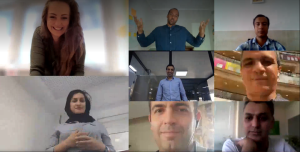 The Iranian participants represented companies of various sizes and from a range of industries, such as food processing, mining, raw materials extraction, the Internet of Things, medical technology, and plant and mechanical engineering. Organised by the trAIDe GmbH together with RWTH Aachen, the day-long seminar centred around the elevator pitch. Participants independently crafted a pitch based on an e-course developed by the trainer, then gave it live. The goal of an elevator pitch is to explain how a business idea stands out and the benefits it offers the listener in the shortest possible time. Ideally, it grabs a potential business partner’s interest and increases their willingness to engage in further, detailed discussion. The Iranian entrepreneurs presented their ideas for working with German companies in their pitches. Constructive feedback from the trainer and fellow course participants helped alumni understand how to make their pitches both exciting and persuasive.
Participants then had a chance to apply their new knowledge in additional pitches. The trainer and experienced tutors supervised small groups of alumni, working with each individual and highlighting elements of German business culture. Finally, one candidate from each group was chosen to compete in a final pitching contest. Naghmeh Ahmadi, Amir Shirvani and Amir Iranmaneshparizi put on a virtual pitch fireworks display, demonstrating the self-confidence the seminar had given them. Amir Shirvani took the day for presenting his joint venture idea best in the eyes of MP participants.
The exuberant mood at the end and the positive feedback showed how much participants had taken away from the course. "I am confident that the ability to focus on benefits and communicate effectively will help participants perform well and enter into win-win partnerships with German business partners," trainer Philip Okito said after the event.
Structure of an elevator pitch:
- Grab the audience's attention (using a rhetorical question or a metaphor, for example).
- Describe the target group’s problem
- Present your approach to the problem and unique selling point (USP)
- Highlight benefits and added value for the target group
- Finish with a call to action
Why is it called an elevator pitch?
 The name “elevator pitch” is based on the idea that a person might run into an investor, potential major customer or another important person in an elevator and take advantage of the opportunity to pitch them an idea. The elevator pitch, also called an elevator speech or statement, describes an idea in a very short time, ideally between 30 and 120 seconds, or around the length of a ride in a lift.